Veterans are increasingly recognised as a unique group within wider society.
For example, the Armed Forces Covenant and the Covenant Legal Duty sets out specific obligations and a duty of care to those still serving, veterans, and their dependents. Veteran-specific healthcare and support pathways (such as Op COURAGE in England and Veterans NHS Wales) have been established, alongside veteran charities and organisations operating across the UK.
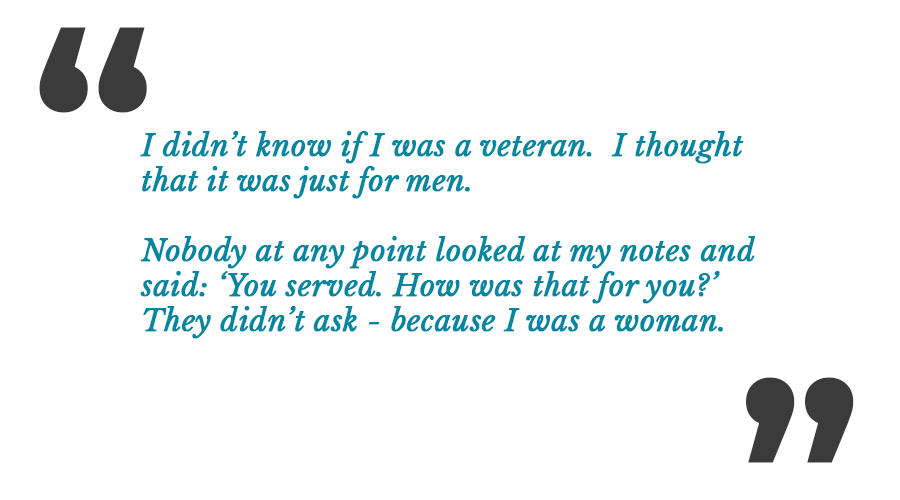
However, there is evidence that some UK women veterans believe they are a ‘hidden community’ and that there is poor awareness and curiosity about their military service, experiences and needs from both professionals and the general public. In some parts of the UK, identifying yourself as a military veteran may also be seen as sensitive.
Research shows that veteran services are seen as focusing on men. Although women veterans may seek help more readily for mental health problems than men, this tends to be from non-veteran-specialist services.
Some women have reported not identifying with the term ‘veteran’ and do not see themselves or their experiences reflected in the branding or description of services. Others have also said they can find these environments inappropriate, unwelcoming or distressing. This may especially be the case for those who have experienced MST in which the perpetrators are predominantly male service personnel.
In common with the veteran community as a whole, UK women veterans report being very proud of their military service. As a result of all the topics discussed, women veterans may require additional support and encouragement to disclose their military service and experiences, and a greater appreciation by professionals of its potential relevance to their work, health and life after service.
If you are interested in exploring the topics covered in this course further, please select the ‘Advanced understanding of women veterans: how services can better meet their needs’ at the end of this training.
(SOURCES: Bailey et al., 2023; Godier-McBard et al. 2022; Jarvis & West, 2024; Graham et al., 2022; Campbell et al., 2023; Wood et al., 2023)