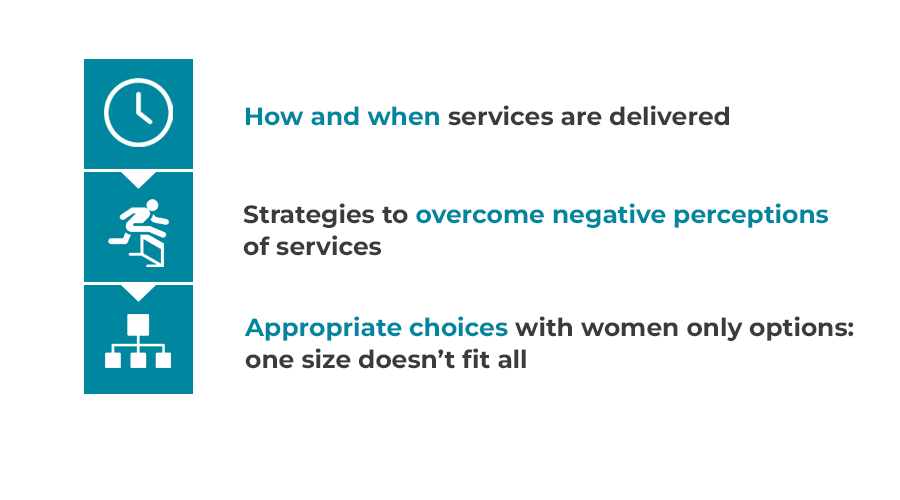
How and when services are delivered is important and will also depend on the specifics of each service. The need to accommodate childcare responsibilities or shift work has been repeatedly identified in research into helping women veterans access support. Flexible appointments and the provision of online support may be an appropriate consideration.
Seeking input directly from women veterans themselves about how they view existing services may help providers develop strategies which address their concerns and preferences. This approach may help challenge negative perceptions of services women veterans may have, while acknowledging the diverse preferences and opinions that exist within the women veteran community.
Although some women veterans have expressed a preference for women-only services, this is not a universally held view. Some women wish to engage with support in their capacity as a veteran rather than as a woman and felt that having segregated support might further isolate them from the wider veteran community. Establishing women-only support and care pathways could allow veterans to choose the type of support that best suits their needs. This choice would mean women veterans, particularly for those who have experienced MST, have an option to access support outside of male-dominated environments if they wish.
(Sources: Campbell et al, 2024; Campbell & Murphy, 2023; Bailey et al, 2023; Hooks et al, 2023, Godier-McBard et al., 2023)