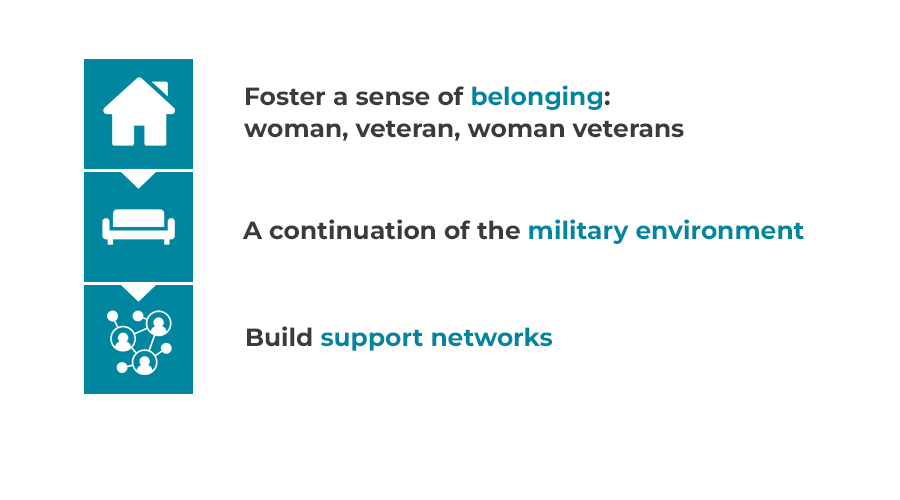
Organisations should aim to foster a sense of belonging for women in veteran spaces, as research frequently reports some women do not feel welcome in male-dominated environments. For example, one woman veteran described her experience attending a veteran breakfast club: ‘All the banter that you heard as you are coming in and you think this is going to be a good laugh it just stops as soon as you walk in. It’s like you are a weird entity.’
Other negative experiences and assumptions, such as being asked if they were a spouse of a male veteran or if they were here to pick up a family member, can contribute to a feeling of exclusion for women veterans which may resemble discrimination faced during their time in service. To address this, services may wish to ensure all staff are educated and aware of women in the veteran space so they do not feel excluded or marginalised.
Some support service environments can mirror or replicate the military service environment. This may not be welcoming or comforting to all, particularly individuals who had negative in-service experiences. For those who experienced sexual harassment, bullying or assault during service, these environments may be actively distressing. Services might seek to create environments that are inclusive, neutral and reflective of life beyond military service.
Informal peer support has been described as invaluable by women veterans in research. This is important when considering the potentially elevated rates of loneliness identified amongst women veterans. Given the smaller population of women veterans in the UK compared to men, these networks may need to extend across wider geographical distances. This might mean services have to do more work to actively reach out and connect with women.
(Sources: Campbell et al, 2024; Campbell & Murphy, 2023; Bailey et al, 2023; Hooks et al, 2023, Godier-McBard et al., 2023; RBL, 2018)