The language and branding of veteran services is generally designed to meet the needs of the male majority. This can be discouraging to some women veterans who don’t recognise their eligibility for support.
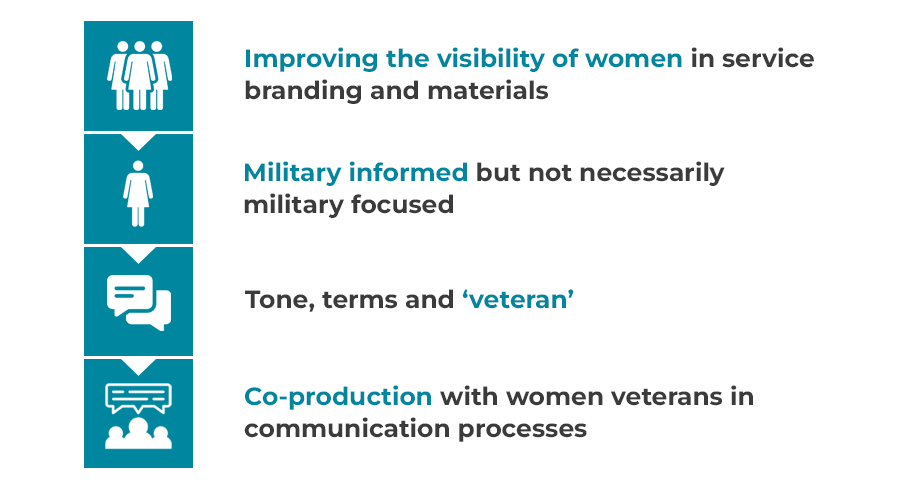
Improving the visibility of women veterans in service branding and promotional materials is one way to promote engagement. Whilst imagery and branding will vary depending on the service, images of women veterans may also need to reflect their diversity and the diverse roles that they hold within the Armed Forces. The evidence suggests that it is important for services to make it clear that they recognise and validate women’s military experiences. This may include acknowledging and addressing all potentially traumatic military-linked experiences, including but not limited to bullying, gender discrimination, combat exposure and MST.
Some women veterans are reluctant to engage with veteran services that are entirely military or combat focused. A preference for military informed but not necessarily military focused services was expressed across research.
Some women do not identify with the term ‘veteran’, despite its growing usage. Whilst this is not uncommon amongst veterans in general, research has highlighted specific misconceptions, including the belief that the term refers only to male personnel, those who were deployed on specific tours, or those who were in combat roles. Asking initial questions like “have you served in the military?” rather than “are you a veteran?” may be more appropriate. Subsequently reinforcing the applicability of the term ‘veteran’ may also encourage recognition of veteran status.
Organisations might consider co-producing design elements of their services with women veterans. Clearly communicating that women are eligible for services, and that their specific needs will be taken into account, may reduce some of the barriers to engagement identified in research and improve women veterans’ engagement with support.
(Sources: Campbell et al, 2024; Campbell & Murphy, 2023; Bailey et al, 2023; Hooks et al, 2023, Godier-McBard et al., 2023)