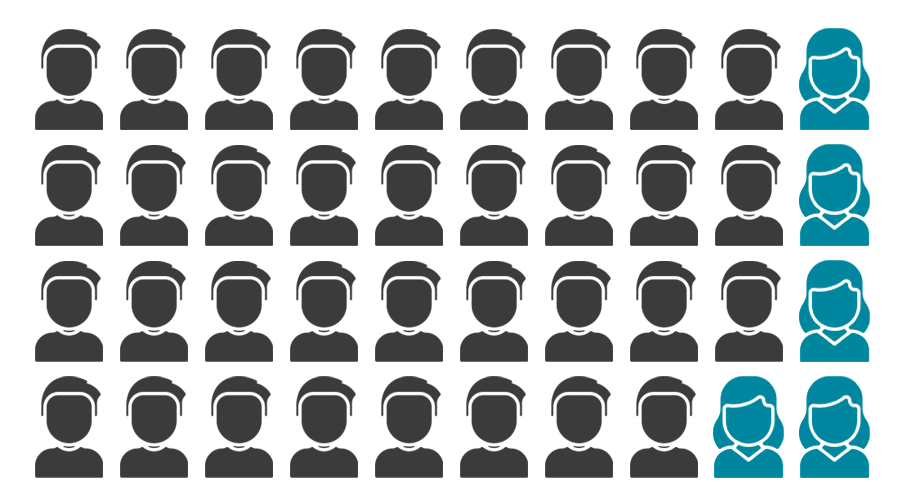
We know from the introductory course that there are more than a quarter of a million women veterans in the UK*. This is around 13% of the total veteran population. Compared to men, women veterans tend to be younger, more are of working age and a greater proportion identify as lesbian, gay and bisexual. More musculoskeletal injuries, such as osteoarthritis have been noted amongst serving women compared to men and higher fertility problems have been identified within research when comparing women veterans to age matched civilian women.
Although military service is reported as a positive experience by veterans generally, they can face military-specific challenges like combat exposure or difficulties transitioning from military to civilian life. These challenges may be heightened for women veterans, who can experience additional and different in-service gender-based challenges. For example, women in the UK Armed Forces have faced systemic challenges including compulsory discharge from service due to pregnancy until 1990, and the so-called ‘gay ban’ in place until 2000. Although many of these systemic challenges are no longer in effect, for some veterans there is a lasting practical, mental and physical impact.
UK women veterans are a broad group, with a lot of potential variation in their service experiences. A veteran who has left service today will likely have had some very different experiences in and after service compared those who left the Armed Forces 20 years ago.
(*272,025 women veterans in Scotland, England and Wales. SOURCES: Baumann et al., 2022; Biscoe et al., 2023; Defence Select Committee: Atherton Report, 2021; Female Veterans Transformation Programme, 2024; LGBT Veterans Independent Review, 2023; Ministry of Defence, 2016; Ministry of Defence, 2023; NRS/Scotland’s Census, 2022; O’Leary et al., 2023; ONS/Census, 2021; Pulverman & Creech, 2021)