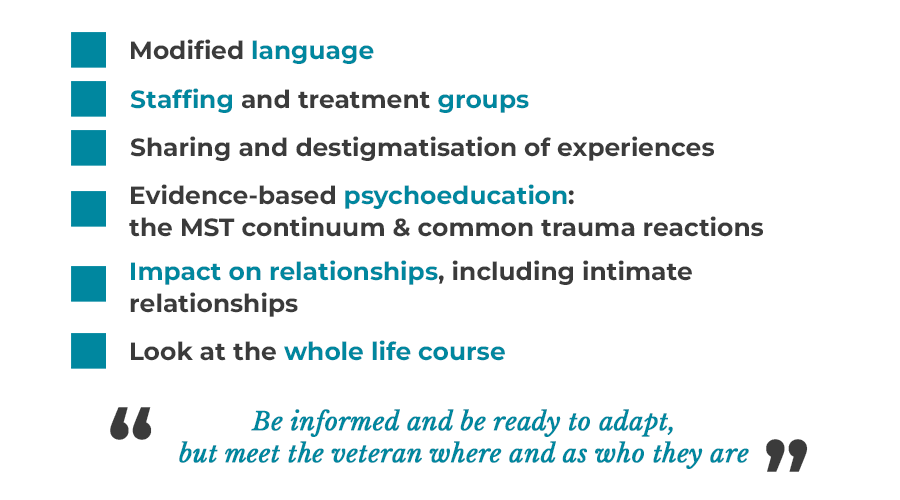
What does this look like in practice? Here is an example of how one clinical service modified their approach to make their service more accessible and applicable to women veterans.
They modified their language, using fewer militaristic or combat-related terms and imagery. They worked in a much more gender and trauma-informed way. For example, they made sure that male staff were never alone with female veterans in common spaces. They also ran women only groups, but importantly women veterans had the choice of whether or not to join single-gender groups and still had the option to attend mixed gender treatment groups if they wished.
MST was destigmatised by the sharing of experiences within the group context, and one-to-one. They reworked some of the evidence-based psychoeducation input they provided. For example, they included the research and statistics round MST and its prevalence, they spoke about the military environment and evidence around sexual harassment.
In line with CPT they included a greater clinical focus on how interpersonal relationships, including aspects of intimate relationships, were impacted by their traumatic experiences and the consequences.
Finally, they recognised that veterans and their presentations and needs are often complex and interlinked, that they were more than women and more than veterans, and their lives were more than just their military experiences.