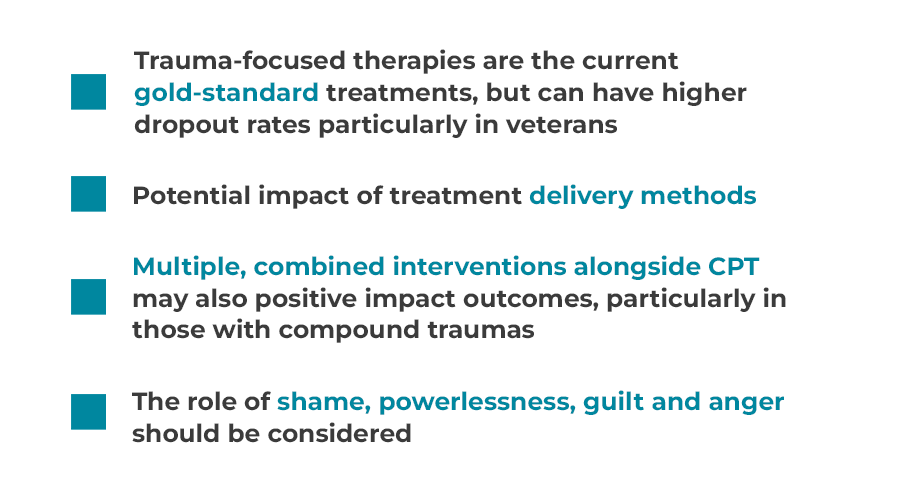
Trauma–focused therapies such as CPT are the current gold-standard treatments. However, they can show high dropout rates, particularly in veterans.
Services that provide clinical treatments may wish to consider multiple, combined interventions alongside CPT to address compound trauma. Research has shown that women veterans who have experienced MST are more likely than their civilian counterparts to have experienced childhood sexual abuse, repeated instances of MST, and interpersonal violence at various points in the life course.
MST can potentially lead to very strong feelings of shame, powerlessness, guilt and anger. These might also be present even without PTSD but still be relevant to how the veteran interacts with others, including service providers. These are emotions and reactions that may require specific attention to help foster positive engagement. From a service provider perspective in general, those feelings may also be extremely salient and need to be acknowledged and addressed to secure positive engagement.
(SOURCES: Campbell et al, 2024; Holder et al, 2017; Kelly et al, 2021; Bostock et al, 2007; Baca et al, 2021)