The international evidence suggests that MST is underreported both during and after service. Having experienced MST may be disclosed at any point in a veteran’s life. This may include transition from the military, major life events such as bereavements or separation, and perimenopause and menopause. One woman veteran who participated in research said, ‘I think the menopause lowered my defences… all the walls [women have] built up to get them through the service life… they might crumble when they start hitting that menopause….’.
MST may be disclosed in settings other than specialist veteran services. From a service provision perspective, linking in with other healthcare and support sources may be an important consideration.
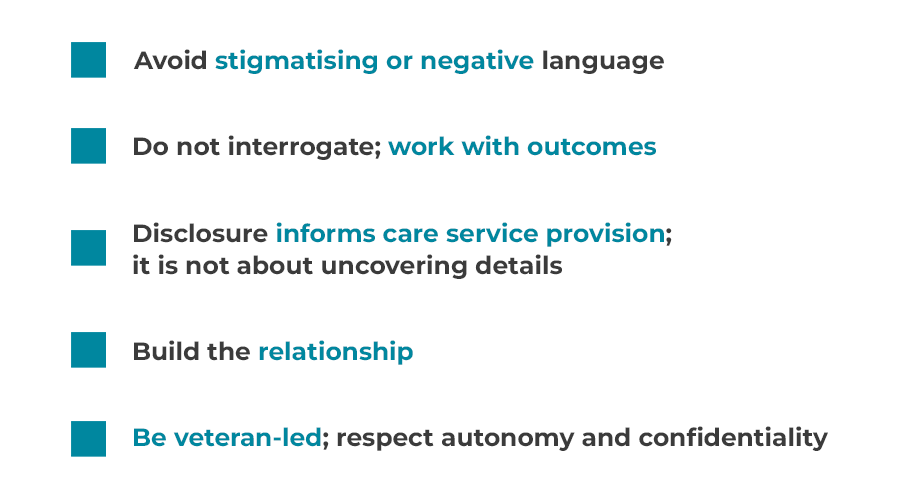
There’s extensive evidence that support and healthcare professionals can feel under-equipped to talk about sexual and gender-based violence. Specific guidelines may be in place for your place of work. However, in general the evidence recommends:
- Avoiding the use of potentially stigmatising language or negative turns of phrase.
- Do not interrogate but instead work with any outcomes and consequences of the experiences. Veterans should not be asked to repeatedly recount the events as doing so can be traumatic and exacerbate shame and distress.
- Disclosure of MST should inform support service provision, and the emphasis is not on uncovering details. Any disclosure should be on the veteran’s terms, and may then inform how services are provided to that individual
- Building a relationship is important. MST is a violation of trust, so (re)building a trusting relationship is paramount.
- Be veteran led and respect their confidentiality and autonomy. Consider what the individual needs and wants from you.
In some instances, the experiences disclosed may be criminal, such as sexual assault. There are treatment, legal and support services that are best placed to take these disclosures forward in that context if the veteran wishes. The focus on any disclosure of MST just as with any trauma, is on how services might adapt to best support and make the veteran feel comfortable. This comes from them and is done in partnership with them.
(SOURCES: Williamson et al, 2021; ATLAS, 2022; NHS Scotland, 2024)