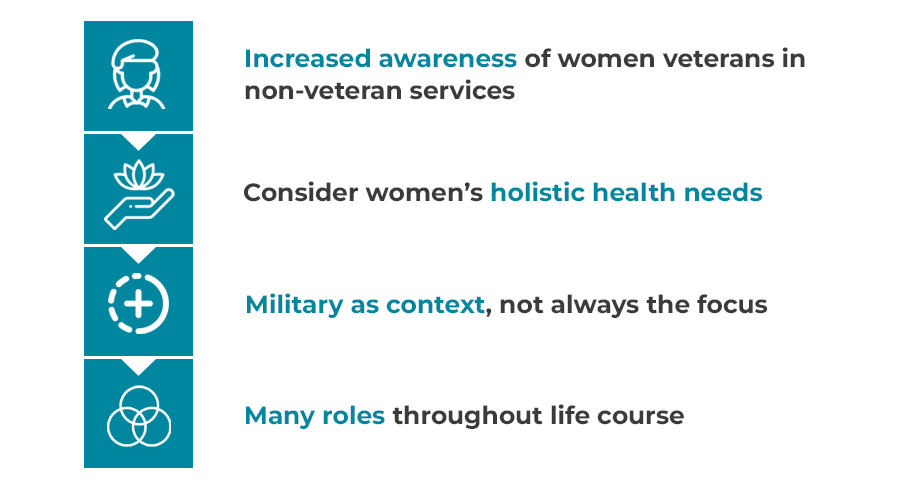
Women can hold multiple roles and identities during and after military service: service member; occupational professional; mother; daughter; partner. Veterans may have other roles or identities that bring their own challenges and unique needs – race, religion, age. Services may need to recognise and respond to this intersectionality.
Research consistently shows that there is a widespread perceived need for greater awareness of women veterans in general amongst care and support professionals. In addition, veterans report that greater links between specialist and non-specialist veteran services is desirable. The evidence suggests that military-informed or military-experienced primary care staff were perceived as integral in successful provision of health services and in helping women veterans access help and support. Research indicates that women veterans may be less likely to disclose their veteran status than men to their family doctor, which means healthcare practitioners may need to proactively ask about military service.
Women veterans in research often report that their military service was not considered in their healthcare profile. Successful treatment was described as individualised and considered their whole life course, not just their miliary service. Because whilst women veterans’ holistic health needs broadly align with those of their civilian counterparts, concerns such as those around menopause, perinatal health and fertility may need to be considered in the context of military service. Research suggests that mental health challenges associated with service can sometimes surface or be exacerbated during menopause and the perinatal period.
Viewing the military as the context for experiences but not always the focus of them was endorsed by women veterans in research.
(Sources: Campbell et al, 2024; Campbell & Murphy, 2023; Bailey et al, 2023; Hooks et al, 2023, Godier-McBard et al., 2023)